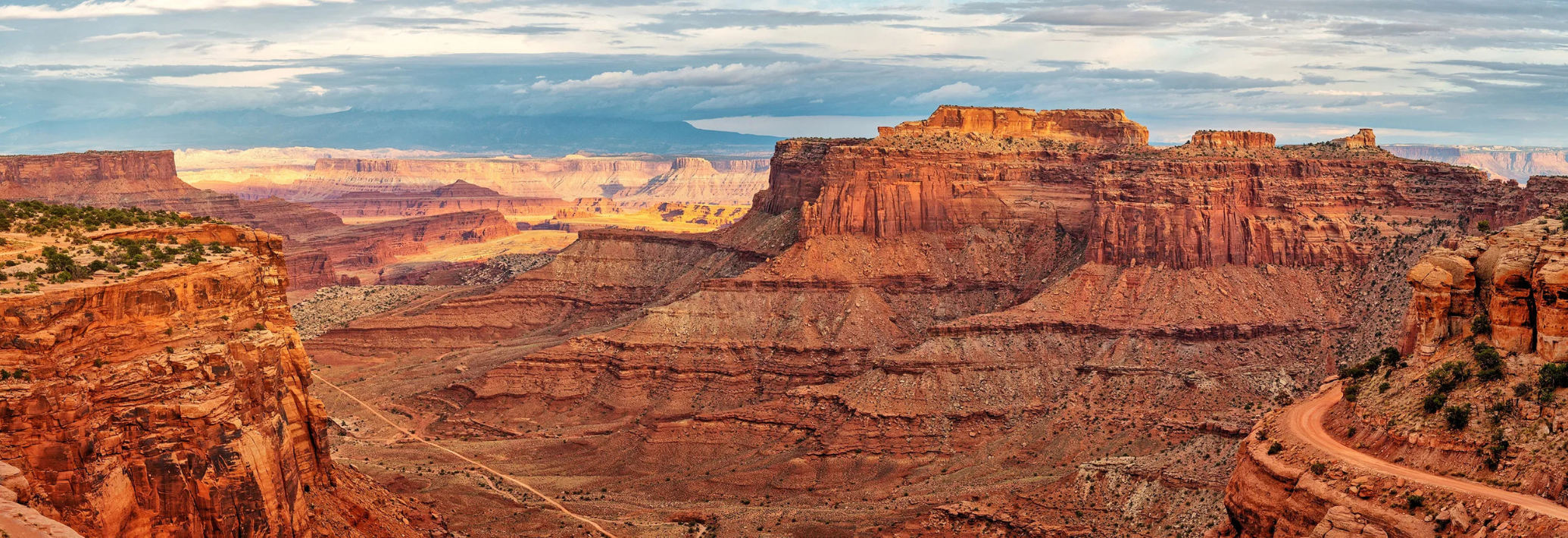
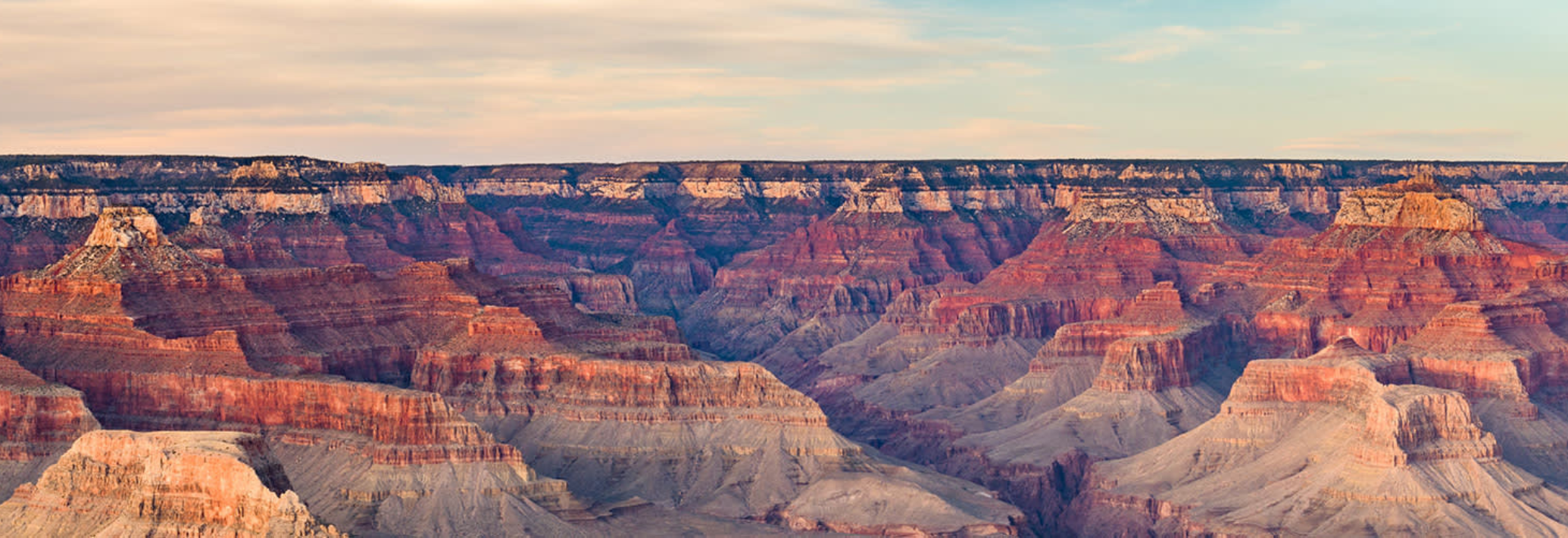
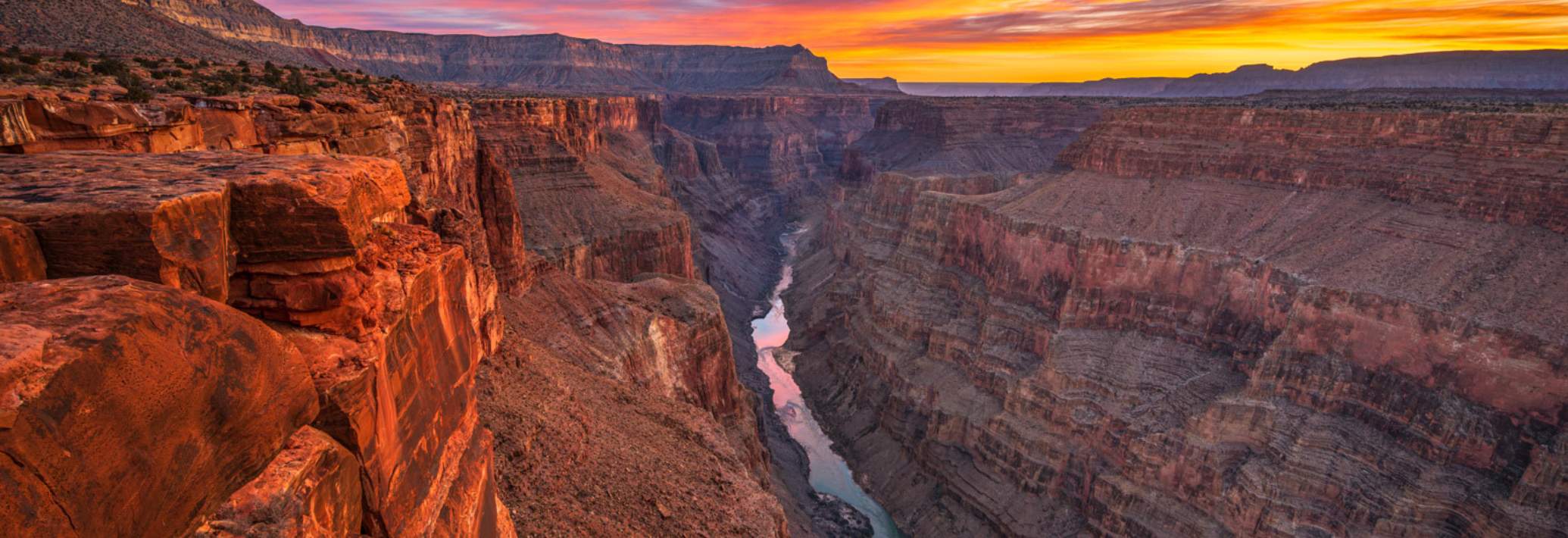
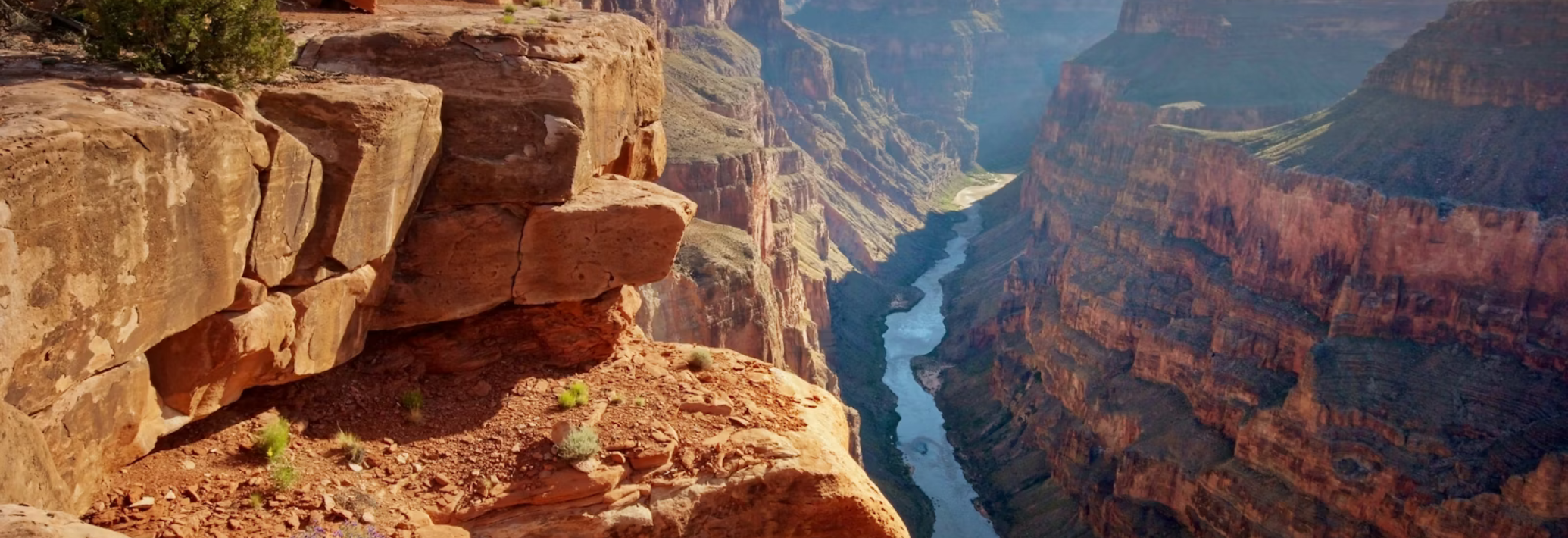
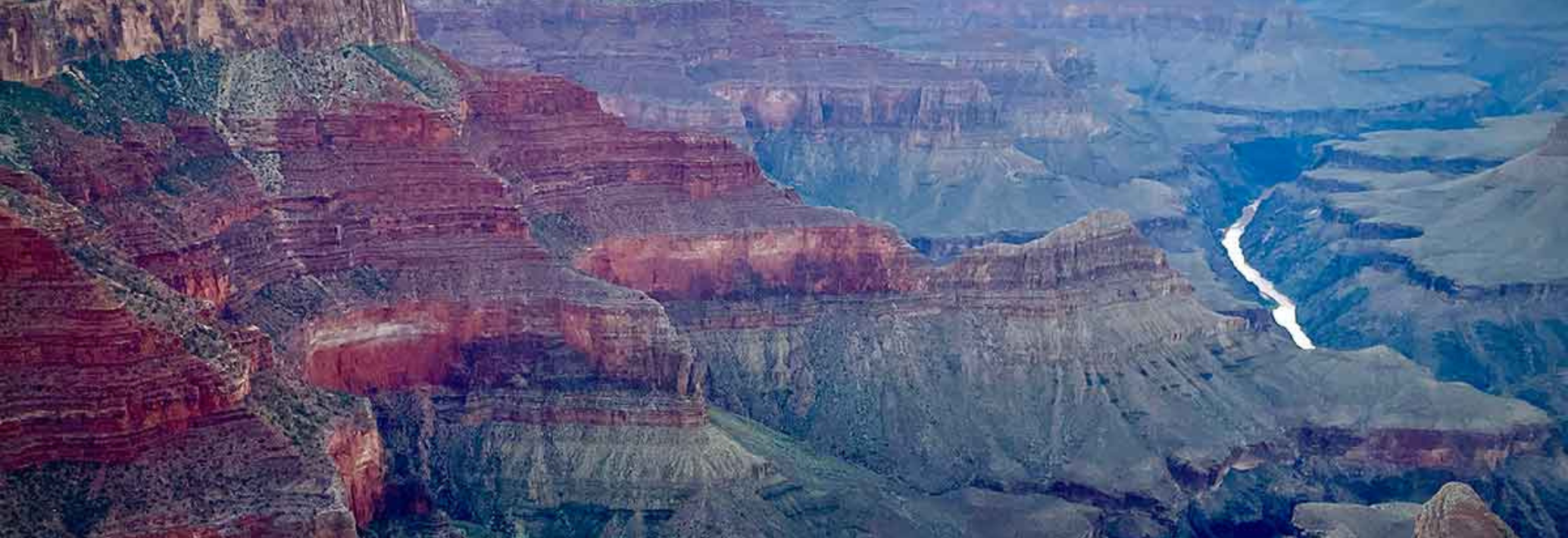
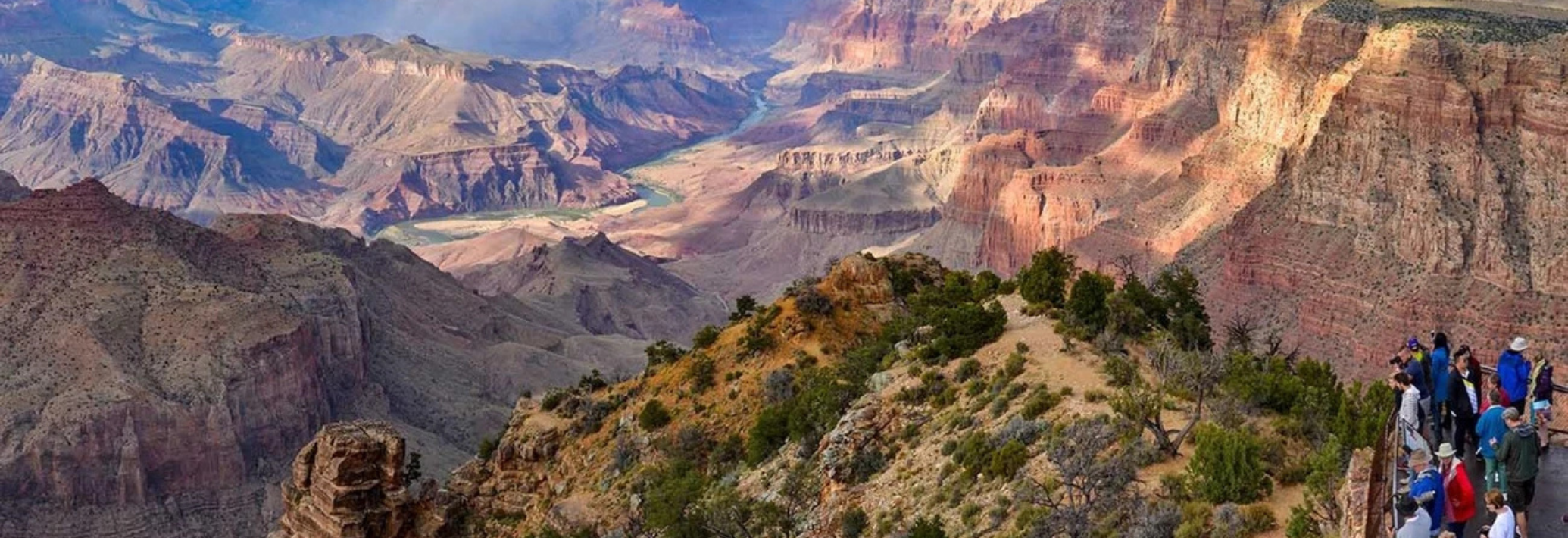
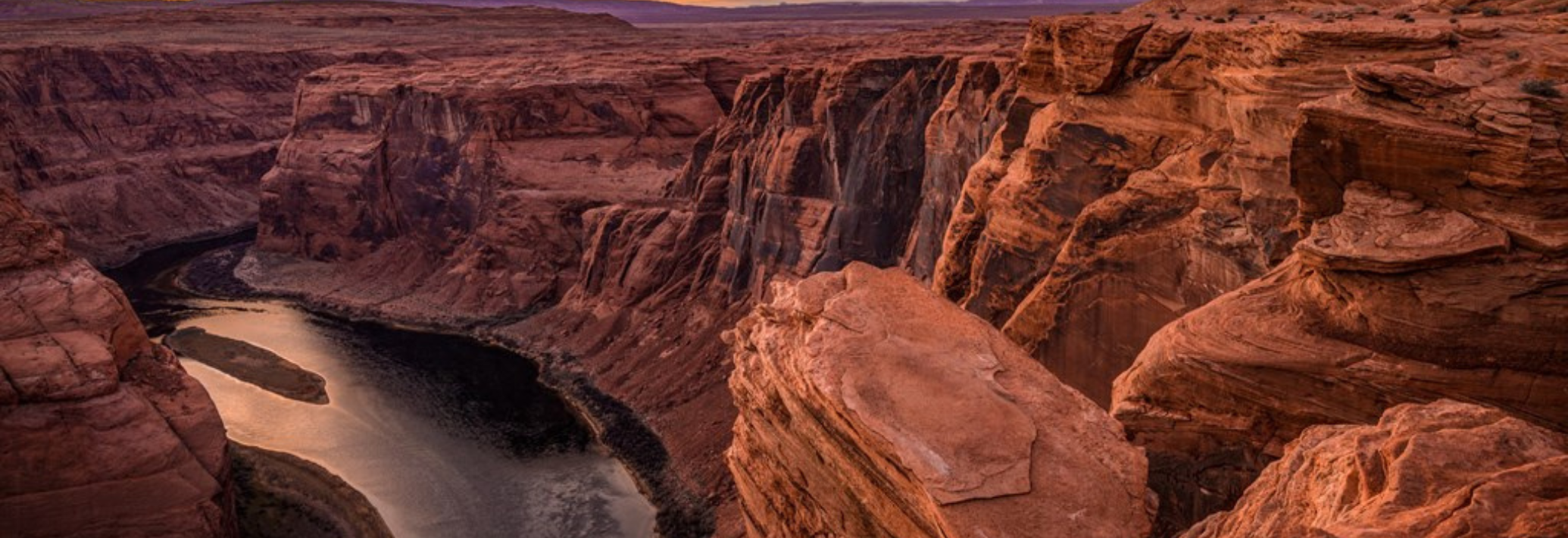
Grand Canyon National Park preserves an iconic geologic landscape and resources ranging from 1.8 billion (PreCambrian) year-old igneous and metamorphic rocks to 230 million (Triassic)-year-old sedimentary rocks, 5 million (Pliocene)-year old to recent volcanic deposits, a complex tectonic and erosional history, and unconsolidated surface deposits.
The Colorado River established its course through the canyon approximately 6 million years ago and likely evolved from pre-existing drainages to its current course. Geologic processes, including erosion of tributaries and slopes, and active tectonics continue to shape the canyon today. The geologic record in Grand Canyon is an important scientific chronicle and is largely responsible for its inspirational scenery.
Palentology resources include nearly 300 diverse and globally significant fossil localities ranging from 1.2-billion-year-old stromatolites to Paleozoic trilobites, plants, reptile tracks, and marine invertebrates, and Pleistocene megafauna in caves.
Key facts
- Park Size: 1,218,375 acres.
- Length: 278 river miles
- Width: Minimum at Marble Canyon, 600 feet. Average Rim to Rim, 10 miles. Maximum Rim to Rim, 18 miles
- Depth: Average, 1 mile.
- Volume: 5.45 trillion cubic yards.
Geology
Grand Canyon National Park preserves an iconic geologic landscape and resources ranging from 1.8 billion (PreCambrian) year-old igneous and metamorphic rocks to 230 million (Triassic)-year-old sedimentary rocks, 5 million (Pliocene)-year old to recent volcanic deposits, a complex tectonic and erosional history, and unconsolidated surface deposits.
The Colorado River established its course through the canyon approximately 6 million years ago and likely evolved from pre-existing drainages to its current course. Geologic processes, including erosion of tributaries and slopes, and active tectonics continue to shape the canyon today. The geologic record in Grand Canyon is an important scientific chronicle and is largely responsible for its inspirational scenery.
Palentology resources include nearly 300 diverse and globally significant fossil localities ranging from 1.2-billion-year-old stromatolites to Paleozoic trilobites, plants, reptile tracks, and marine invertebrates, and Pleistocene megafauna in caves.
Human History
The oldest human artifacts found date to the Paleoindian period and are nearly 12,000 years old. Since that time, various cultures have continually used and occupied lands that became the park. Archaeological evidence from the following prehistoric culture groups is found in Grand Canyon National Park: Paleoindian, Archaic, Basketmaker, Ancestral Puebloan (Kayenta and Virgin branches), Cohonina, Cerbat, Pai, and Southern Paiute. Historical-period cultural groups include the Hopi, Navajo, Pai, Southern Paiute, Zuni, and Euro-American.
There are currently 3,391 ancestral sites documented within the park dating to the prehistoric period, representing approximately 7.5% of park lands inventoried. In addition, park records document evidence of historic period use from 1540-1950, including 453 locations with evidence of historic Native American use.
Tribal Partners
Grand Canyon is home to 11 federally recognized tribes with deep history and connection to the Grand Canyon since time immemorial. Tribal governments and communities work closely with park administration and management on a host of programs. Through collaborative projects such as the Desert View Watchtower Intertribal Cultural Heritage Site, the park is working with tribes to provide accurate and culturally appropriate information to visitors. This “First Voice” programming acknowledges the rich and diverse cultural history of the Grand Canyon and celebrates the connections native people have to the Canyon. Tribal lands surrounding the park offer many unique tourism opportunities to visitors planning a trip to the Grand Canyon.